

The Perfect Souvenir
Belgian wool, an unexpected yarn shop, and the Brussels lace museum. It all ended up in this scarf.

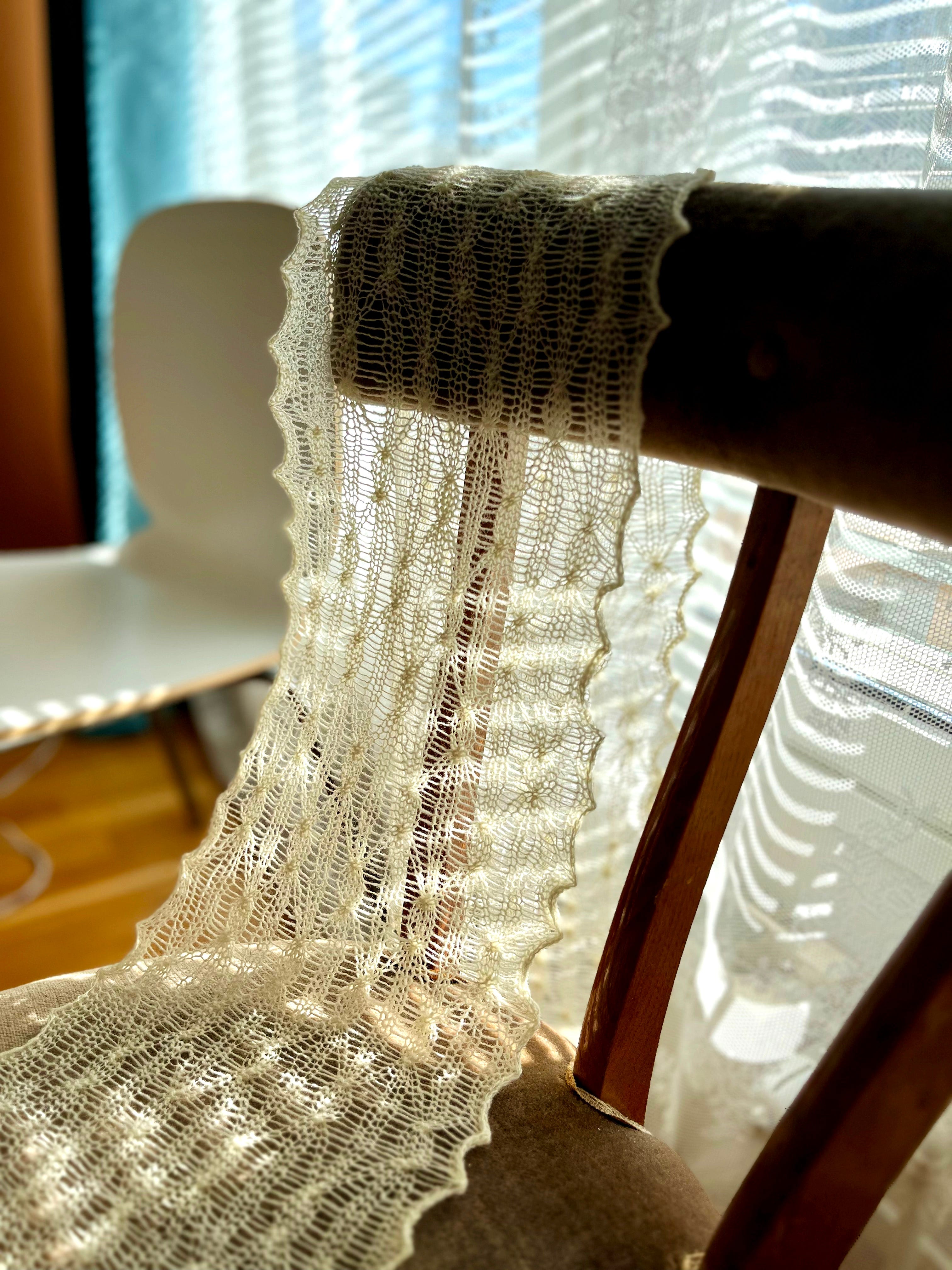
In March I took a long weekend trip to Belgium with my partner. Since it’s such a compact country and the train network is extensive, you can cover a lot of ground without much planning. We made day trips to different cities, one of which was Namur.
Namur is an hour south of Brussels by train, where the River Sambre meets the River Meuse. The regional capital of Wallonia, it has an impressive medieval citadel on a hill, and a pleasant old town. We had no particular agenda, so we just walked.
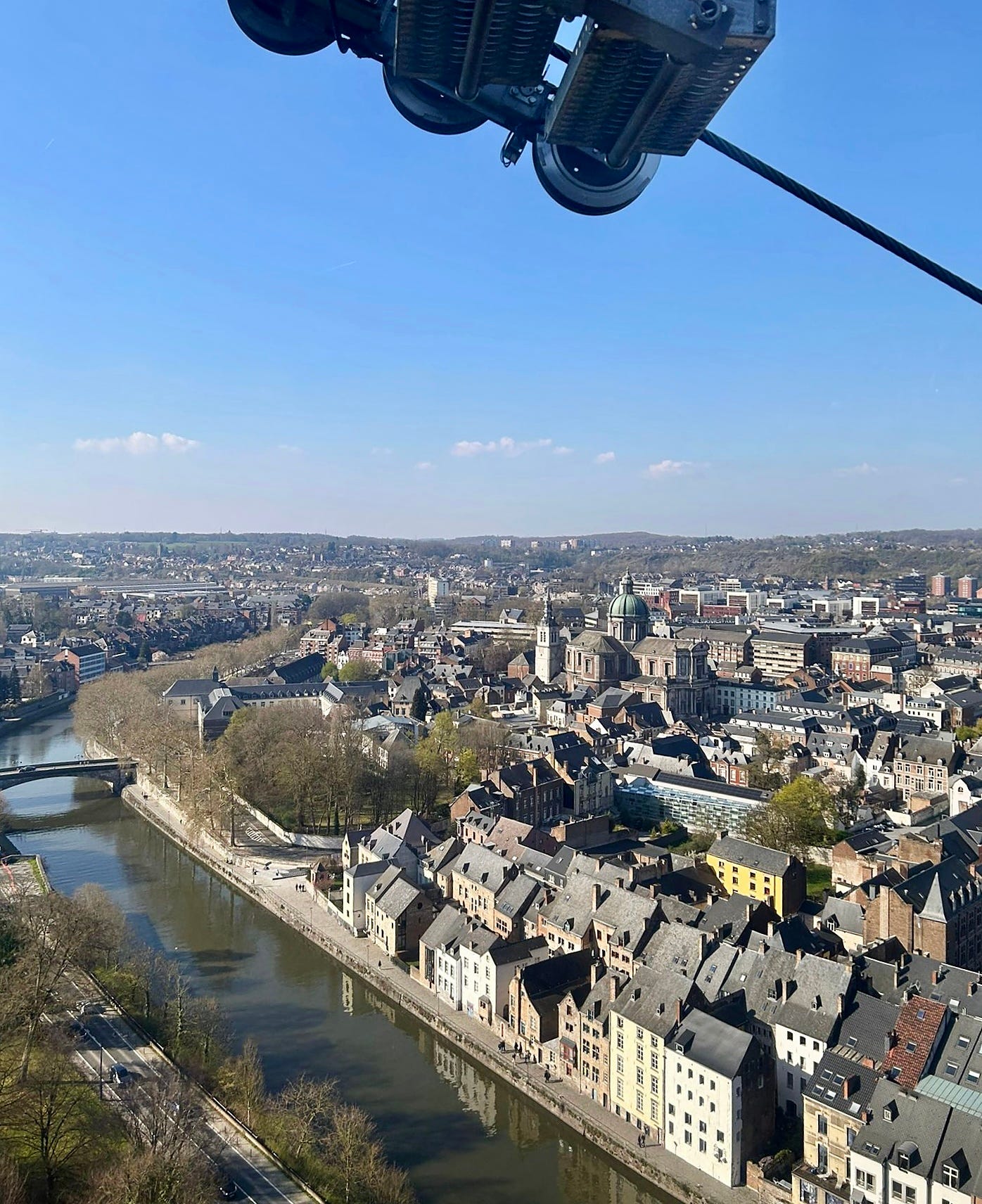
After a somewhat nerve-racking cable car trip, we continued to stroll in the old town. There are plenty of small boutiques, and the terraces were lively and inviting, even on a chilly March afternoon. We eventually came upon a shop window that grabbed my attention, Atelier-53, and wandered in. It was the kind of place that takes a moment to categorise: high shelves of yarn alongside bolts of fabric, second-hand needles in a jar, a general sense that everyone who came in was there to make something. The yarn selection was small but clearly thought about, the kind of muted colours and unique yarn compositions that make you want to sit down and plan a project.
The owner was happy to chat, and I mentioned that I was drawn immediately to the coned yarn I could see tucked away near the counter. The week before I had acquired a knitting machine, and cones were suddenly relevant to my life in a way they weren’t before. I got talking to the owner, and she told me about the yarn. It was called ‘Mouton ultra locale’ and was unique to the store. The wool was from the Shropshire breed of sheep and originated from a single farm in Havelange, 40 km away, before being washed in Verviers and spun in France. One ply, and a beautiful natural colour, it was finer than I expected. She gave me the details and I was in love.
I spent some time working out whether a cone would feasibly fit in my backpack. Budget airlines have a way of making you do this arithmetic in real time, but I figured it would fit, so I bought it.
* * *
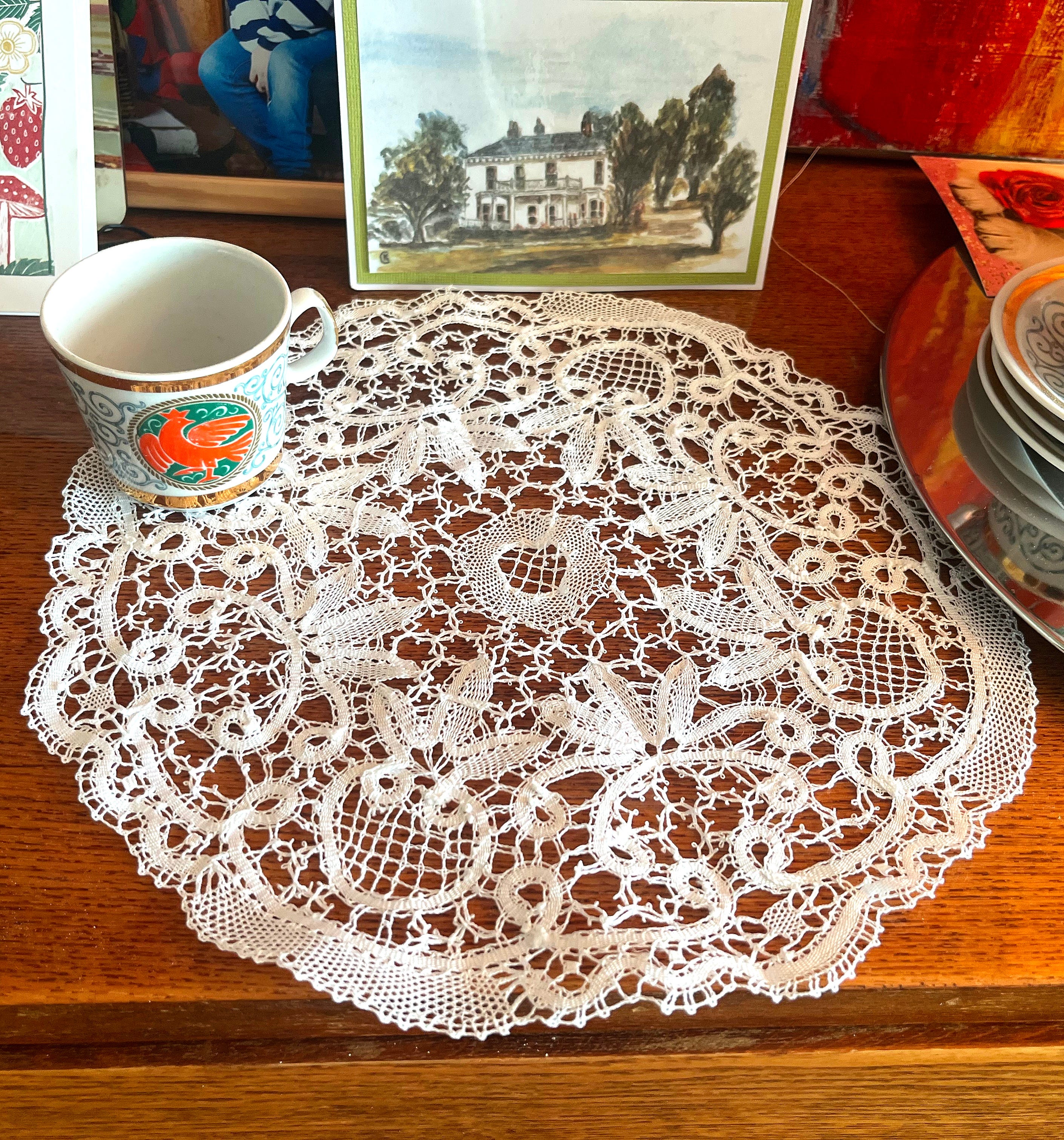
The day before, we had been to the Fashion and Lace Museum in Brussels, and that was where I learned that Brussels lace was a thing, or rather, that it was the thing. A type of bobbin lace, it has a tradition going back to the 15th century, and was considered the finest in the world for a long time. The fabrics were made mostly from local linen, painstakingly fine work produced by hand.
Unfortunately the technique is a dying art, but standing in that shop in Namur with a cone of local wool in my hands, I knew that knitted lace and fine, single-ply yarn would be a perfect match.
* * *
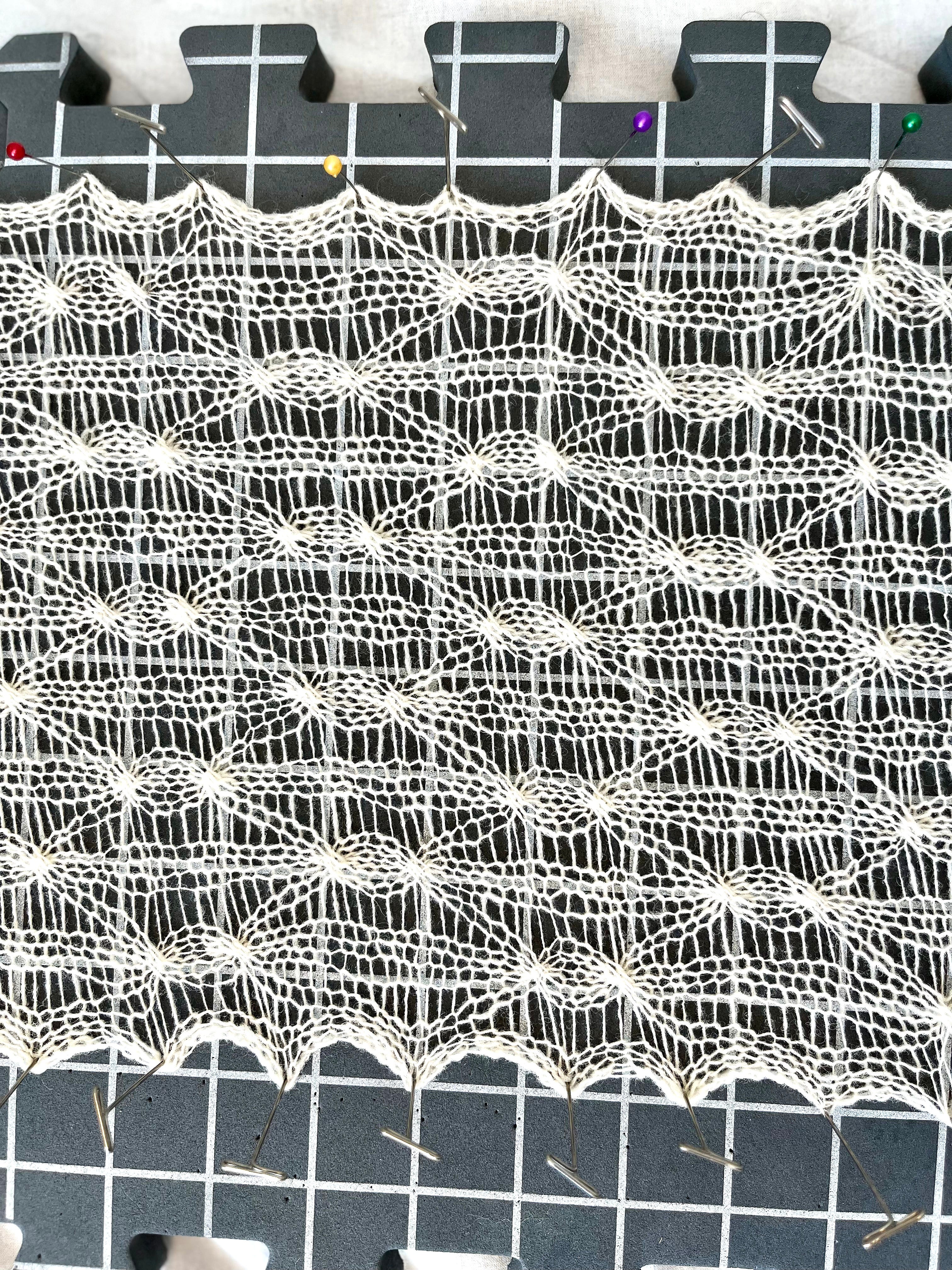
The stitch pattern came from a tutorial by Elena Berenghean, who runs the YouTube channel knitology1x1. She focuses on open work and hand-manipulated stitches for the machine, and her tutorials are very clear, even for a beginner like me. The pattern makes elongated diamonds: cables paired with vertical ladders running the length of the fabric.
On a knitting machine, ladders are straightforward. You push needles out of work and leave them there. The yarn passes over the gap on every row and the column stays empty. A clean vertical line in the fabric, no drama.
I have since tried to translate the same pattern to hand knitting. It is the same fabric, technically, but the process is different enough that it barely feels like it. I made the ladders with dropped stitches, which means you need to plan which columns will drop and keep track of them throughout. On the machine, you notice the empty needles and work around them automatically. By hand, the empty columns are invisible until you drop the stitches, so you have to hold the structure in your head. It requires more concentration than I could maintain for a whole project.
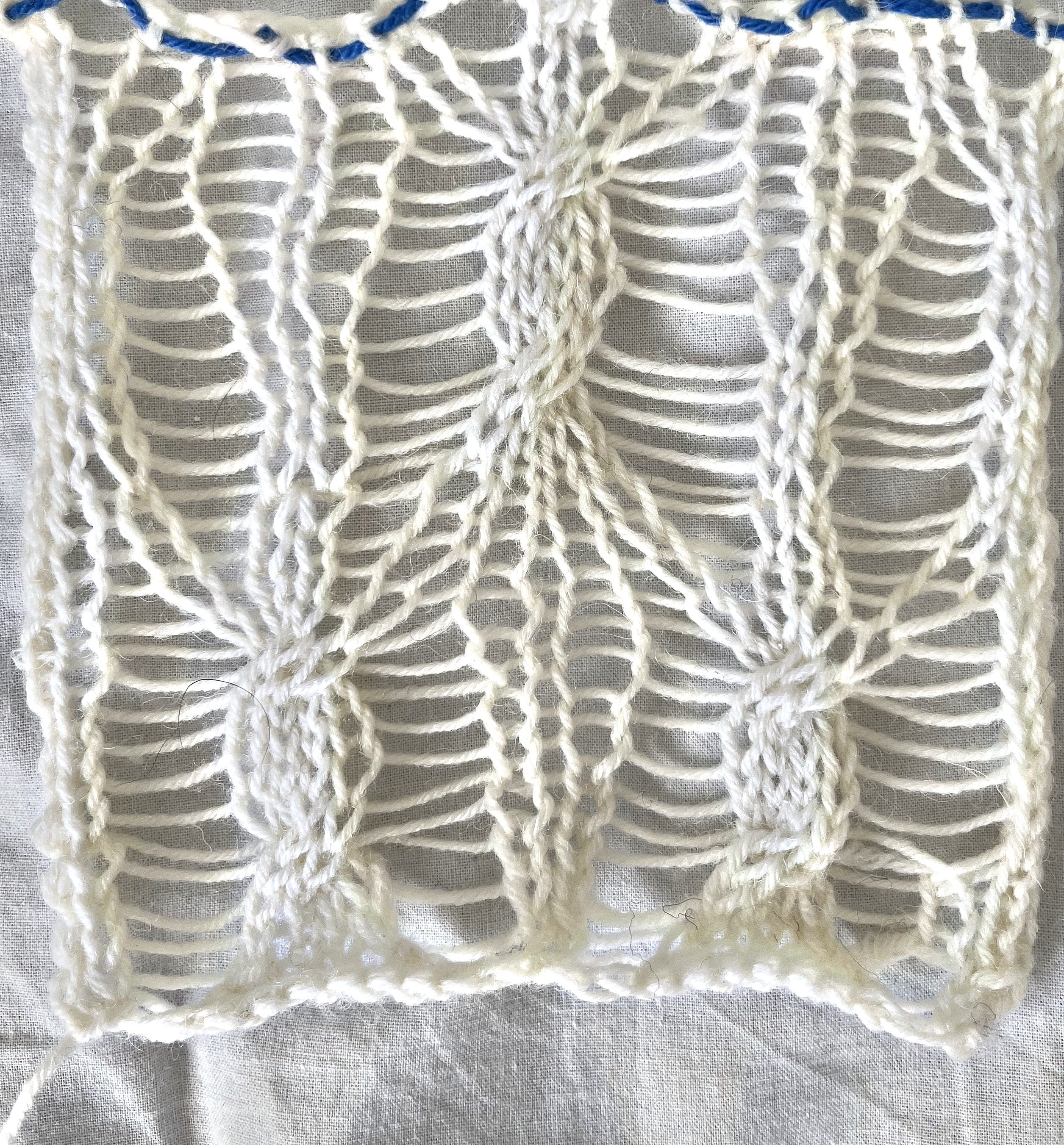
I’ve also ordered a copy of Elena’s book, Lace and Open Fabrics, which covers machine knitting techniques for exactly this kind of work. There are a lot of stitches in there that I can’t wait to try and I hope to incorporate them into more projects in the future.
* * *
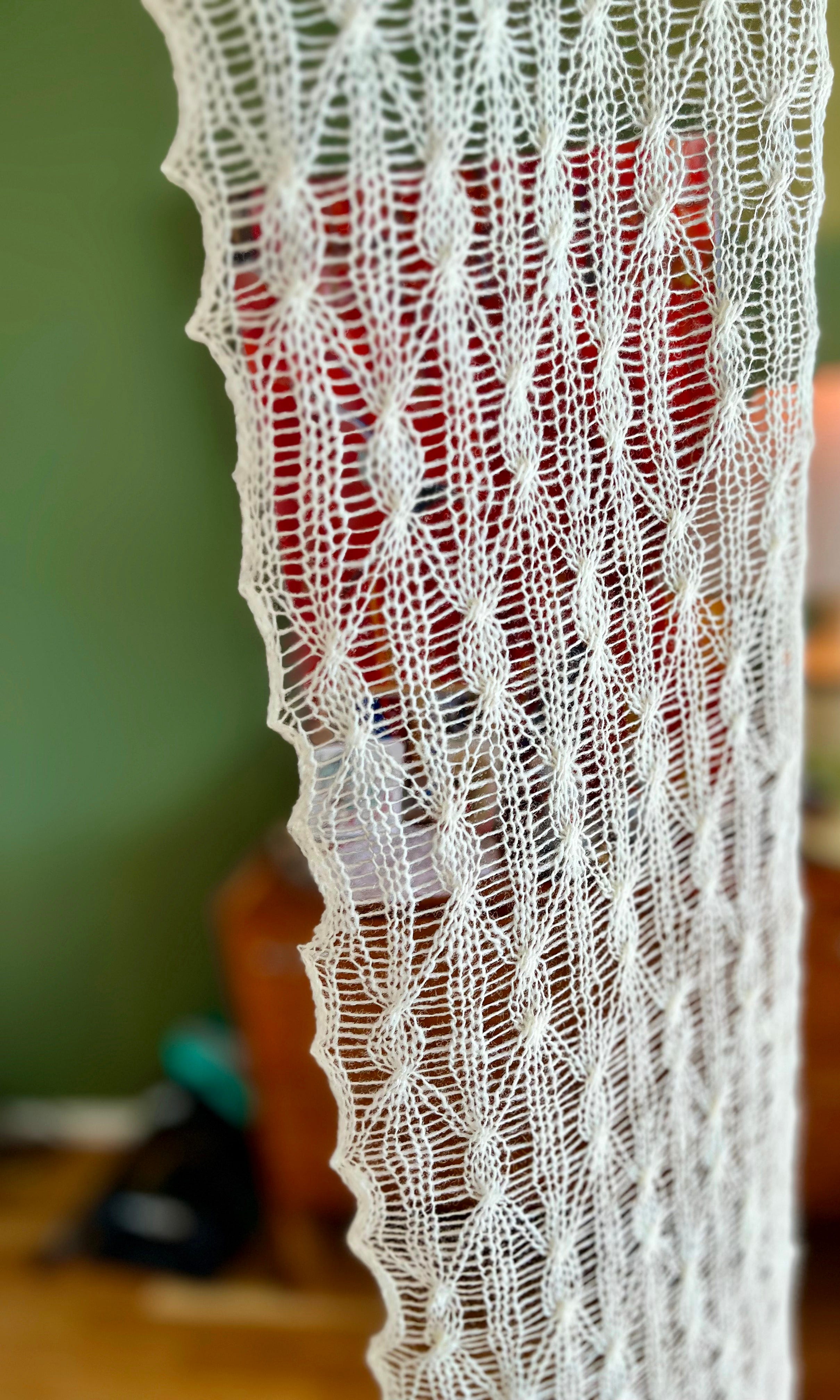
The scarf is around 22 cm wide and 170 cm long (8.5“ x 67”). There is more handling of the stitches than you may think in machine knitting, but once I had swatched and calculated the pattern, the knitting on the machine only took about a weekend. If I hand knitted this, I’d probably be writing to mark the 1 year anniversary of the Belgium trip.
The yarn has been a pleasure to work with. Single ply needs a little care with the transfers and cables, as there’s always a risk it will break. Keeping a loose tension helped avoid this, and the final fabric blocked out beautifully. It is not Brussels lace, but it came from that afternoon in the museum, and from a farm just outside Namur.
I did not go to Belgium planning to make a lace scarf, and, if I’m honest, I didn’t know that Brussels had a lace museum, or even that Namur existed. I thought maybe I’d buy some sock yarn if I spotted some, but ended up coming home with much more.