

Is Purling Optional?
The purl stitch is often described as the other half of knitting. Yet many knitters go to significant lengths to avoid it, and there is a longer history behind that than you might think.

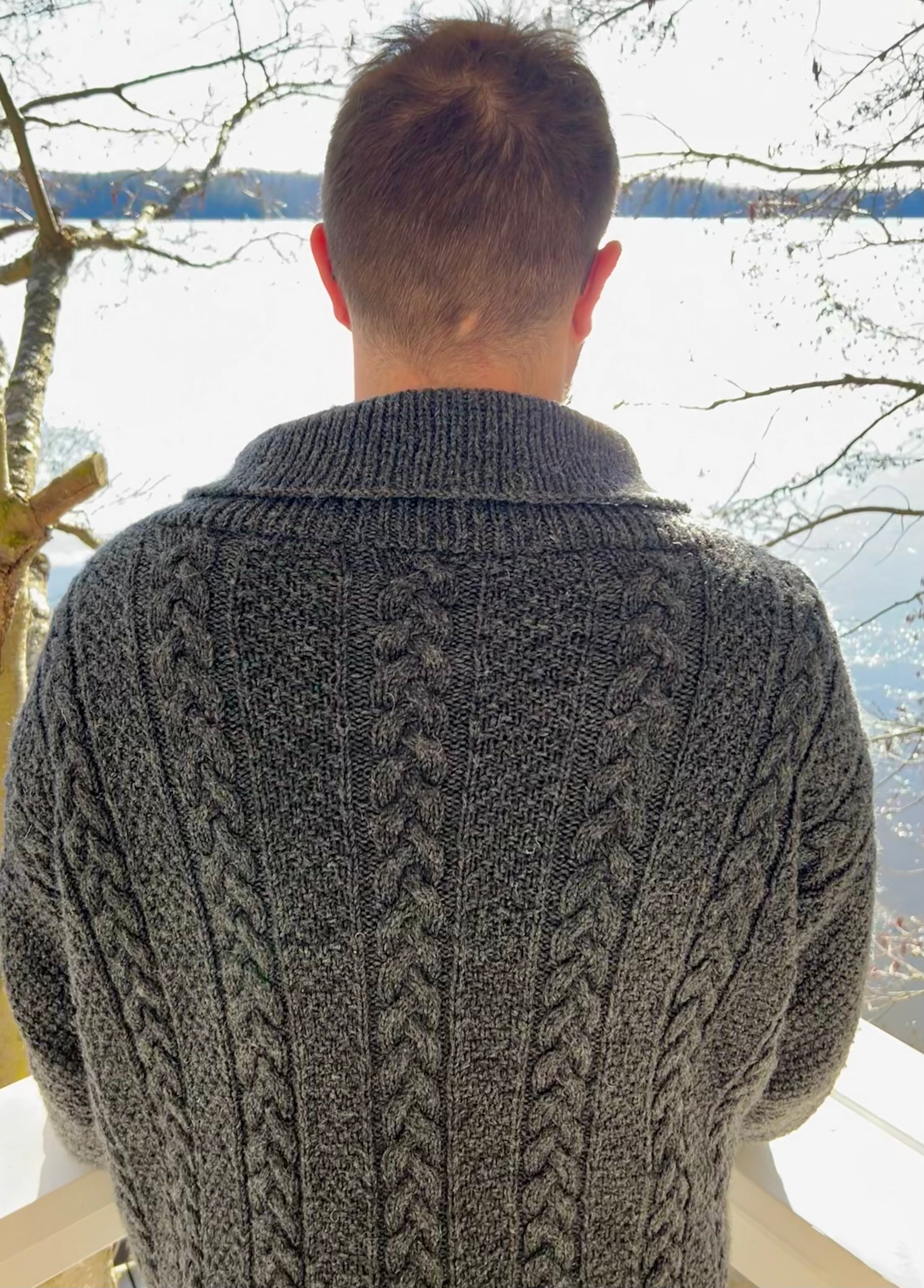
Usually when we learn to knit, the knit stitch comes first, and for many people it feels natural relatively quickly. Then comes the purl: the same motion in reverse, the yarn in front, the needle inserted from right to left. It is often described as the more awkward of the two, and the Continental purl in particular has a reputation for feeling strained at first. There are ways around it: Norwegian purling keeps the yarn at the back and avoids the motion most people find fiddly; combination knitting wraps the yarn clockwise on the purl rather than the usual anti-clockwise, which some knitters find more comfortable. It’s worth trying all of them, and worth trying more than once. I came to love Continental purling, specifically combined Continental, and now feel that my purl rows are often more enjoyable than the knit rows.
But the premise behind all of this, that mastering the purl stitch is necessary to advance as a knitter, is worth examining.
Knitting and purling are two ways of making the same basic stitch. The technique differs - the position of the yarn, the direction the needle enters the loop - but the stitch in the fabric is structurally the same either way. From the right side, a stitch made by knitting shows as a smooth V, which we call a knit stitch; one made by purling shows as a bump, a purl stitch. When you work flat in alternating rows of knit and purl, you get stockinette: smooth on one side, bumpy on the other. When you work only knit stitches flat, you get garter stitch, bumps on both sides, a thicker and more elastic fabric. To many, garter stitch is associated with beginners.
Shetland lace, which is widely regarded as among the finest hand knitting ever produced, is worked entirely in garter stitch. There is not a single purl stitch in a traditional Shetland lace shawl. This does not make it beginner’s work. The patterns are complex and delicate, the finished objects are remarkably fine, and they are built entirely from the knit stitch, worked flat, with decreases and eyelets forming the complex patterns.
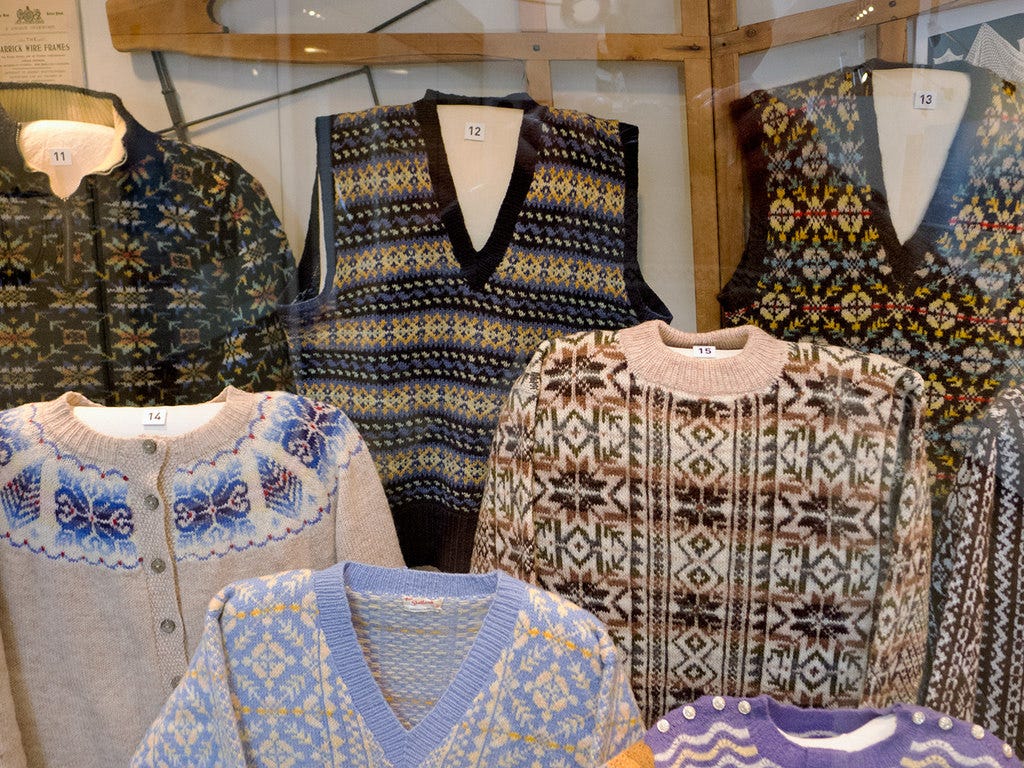
Conversely, Fair Isle garments are typically worked in the round, which means stockinette is produced using only the knit stitch: every round goes in the same direction, so the purl side never faces you. These are some of the most iconic knitted garments in the world, and at their most elaborate they involve many subtle colour changes within a single motif. For sleeve types which would usually necessitate working flat above the armholes, such as drop shoulder and set-in sleeves, steeks are added instead. These are extra columns of bridging stitches worked into the fabric at the point where an opening will eventually be cut. The knitter continues in the round for the entire garment without ever purling back; the steeks are cut through at the end to open the fabric. There are even examples of Fair Isle garments knitted flat with the right side always facing the knitter, requiring the yarn to be cut and rejoined on every row.
Working in the round is a very old method of knitting. Surviving early examples of knitted objects, fragments from Egypt, Spain, and the Middle East from the medieval period, tend to be worked circularly. The assumption that flat knitting is the default and circular knitting is a specialist technique has things a bit backwards. Producing stockinette by working flat, knit one row, purl one row, appears to have become more common around the turn of the last century, as fashions changed and the sweater became an item of everyday clothing. The expectation that knitters work flat pieces and seam them together, in the long view of the craft, is a relatively recent one.
The purl stitch itself does appear in some of the earliest knitted fragments found in Egypt, but that knowledge did not carry into European knitting. Richard Rutt, in A History of Hand Knitting, concluded that the purl was a late invention in the European tradition, and the earliest datable European purl stitches are on the stockings that Eleonora de Toledo, wife of Cosimo de Medici, was buried in around 1562. Before that, it seems that European knitting was worked without it.
There is a further complication: Portuguese-style knitting, found not just in Portugal but also in Turkey and parts of South America, treats the purl as its primary stitch. The yarn is tensioned around the neck or on a pin at the chest, with the purl side facing the knitter, making the knit stitch the awkward one. It’s even possible that this style could be the oldest form of knitting, which adds another layer to the question of which stitch is foundational and which came later.
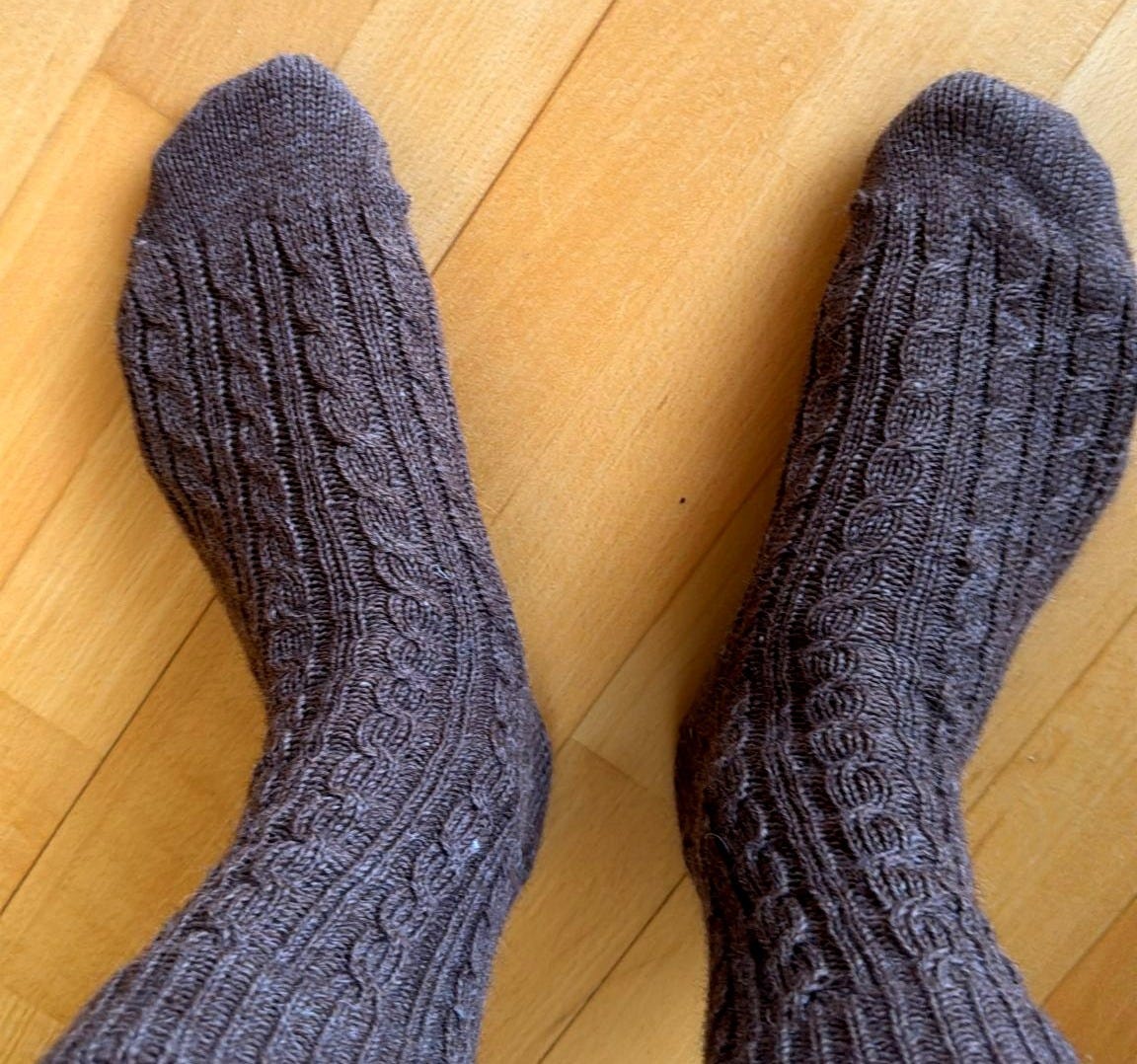
None of this means purling is unnecessary. Ribbing requires alternating knit and purl stitches within the same row, and ribbing is hard to replace. On my knitting machine, which produces only stockinette, the workaround is to ladder down a column of stitches and latch them back up from the other side, turning them from knit to purl one by one. It works, but it is not fast. Textured fabrics, cables, seed stitch, most of the stitches that define the gansey tradition, are built from combinations of the two, and ganseys are some of the most technically complex and historically significant garments in knitting. Even those are often worked in the round with plain stockinette making up the body, so the purling is concentrated in the sections around the chest.
I am not arguing that knitters should avoid the purl stitch or stop working at becoming more comfortable with it. Getting comfortable with purling allows you access to the whole world of knitting, and I’ve come to love it. The point is that a preference for purl-avoidance tends to get treated as beginner behaviour, something to grow out of, when the preference is neither new nor limiting. Some of the most admired knitting in the world was built around this aversion. The current popularity of stockinette sweaters worked in the round is not a modern shortcut; it is a very old preference, and I don’t think it’s going away.
Further reading
A History of Hand Knitting, Richard Rutt: the standard academic reference on the subject, and the source for much of what we know about when the purl stitch arrived in Europe.
The History of Hand Knitting, V&A: a broad overview of the craft’s development, from the earliest surviving examples through to the present day, with pieces from the V&A collection.
British Knitting Traditions, V&A: on the regional traditions of the British Isles, including Fair Isle, Shetland lace, and the gansey.
History of Hand Knitting, KC Guild: a readable overview with good detail on the purl stitch’s timeline and earliest documented examples.
The way that I purl is not uncomfortable at all. It's like a pick stitch. The only issue I have is that I can't purl with the yarn in my right hand. I hold the yarn in my left and have no problems knitting with it in the right hand.
And you should definitely learn Shetland lace! It tends to be lace where the pattern is easy to memorize. I love knit lace but my eyes aren't up to it anymore.
The reminder that Shetland lace — one of the most demanding knitting traditions in existence — is worked entirely in garter stitch is one of those facts that reframes everything that follows. Your note on the history of flat versus circular knitting is the most interesting part for me: the assumption that flat pieces joined with seams is the standard, and circular knitting an advanced technique, has it precisely backwards. Portuguese-style knitting treating the purl as primary is something I hadn’t encountered before; the suggestion that it may represent an older tradition complicates the usual Anglo-centric narrative of the craft’s development considerably.